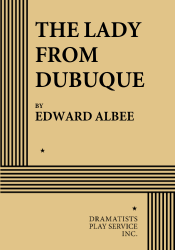
THE STORY: Three young couples are playing Twenty Questions. The drinks have been flowing, so the mood has gone from good to bad in a very short time. As it happens, the hostess, who has the most abrasive tongue of all, is dying of cancer, and the party ends when her pain becomes so intense her husband must carry her to bed. After the stage is empty, a handsome, mysterious woman, accompanied by an equally handsome man, enter the house and settle in for the night. In the morning they are still there to greet the baffled young husband and his ailing wife when they come down for breakfast. Unruffled by the young couples questions, the two must also confront the guests of the previous evening. While claims are accepted that the mysterious woman is the mother of the dying wife, intriguing inconsistencies remain: Is she, in truth, the angel of death? In the end there are no neat answers, but questions raised, and debated, will reverberate in the mind long after the play itself has ended.
This probing, provocative and eloquent examination of death and loss is clearly the work of a master playwright at the height of his powers.
“…every line bears the name of Edward Albee. It is not only fine theater, savagely funny and affecting. But it is also his best work since
Who’s Afraid of Virginia Woolf?…” —Time Magazine.
“…it has the hand of a master. It is richly worth seeing…” —New York Post.
“It’s a troubling evening, but an individual one by a voice unlike any other on our stage.” —New York Daily News.