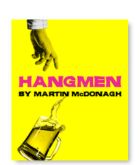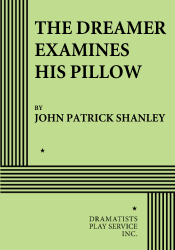
THE STORY: The first scene of the play is a conversation between two lovers, Tommy and Donna, who broke up some time earlier but who are obviously still attracted to each other. Donna is enraged because Tommy, a would-be artist, is now having an affair with her younger sister, but Tommy, stretched out on his recliner (which, apart from a refrigerator full of beer, comprises the entire furnishings of his spartan apartment), is seemingly unmoved by her harangue. In the second scene Donna visits her father, a once successful artist who stopped painting at the death of his wife, whom he had bullied and betrayed despite his professed love for her. Combative and complex (but also very funny) the father sits and drinks and eventually gives in to his daughter’s demand that he force Tommy to marry her or beat him up. Then, in the third and final scene, the father and Tommy confront each other, with results that are sometimes menacing, sometimes antic, with a lively discussion about art and women eventually leading to a sort of tenuous truce—and a grudging recognition of the responsibility that love, in its various guises, imposes.
A striking, surreal study of the often bizarre byways that love between men and women can follow. Told in three related scenes, the play uses indirection and richly evocative language to make its unsettling but ultimately illuminating points.
“…pungent, thought-provoking, original, poetic…and leading by stylized, fantasticated ways to genuinely startling illuminations.” —New York Magazine.
“…a philosophic dream-comedy about love, marriage, and maturity.” —Village Voice.
“…Mr. Shanley is a born playwright…” —The New Yorker.